
Tsz Chai Alan Liu, 16
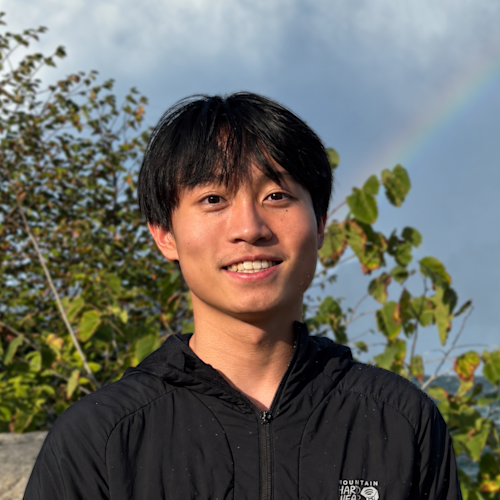

From Badminton Practice to Community Organizer: How Alan Liu Is Forging His Path in Tech
A two-hour badminton practice is perhaps an unconventional gateway into tech, but for Alan Liu, it changed everything. Alan was attending his regular badminton practice when James Cao happened to join the group to make up for a missed session. During a conversation on the court, James - the co-founder and now director of Hack Canada - introduced Alan to something he had never encountered before: hackathons. Though initially intimidated by the prospect of competing alongside university students, Alan decided he had nothing to lose and took a chance that would ultimately shape his path in engineering.
His passion for tech and creating stemmed from game development, teaching himself Unity, C#, C++, and Unreal Engine. He spent countless hours building custom games, drawing 2D pixel art, designing 3D models in Blender, and composing original music. But despite having the drive to create, he lacked a clear sense of where to take it. “I was ambitious but directionless. I had all these skills from game development but no real sense of where to point them. I wanted to do something meaningful but didn't have anyone showing me what that could look like. The hacker community gave me that direction.”
Alan’s official entry into the ecosystem was StarterHacks 2024 at the University of Waterloo. The weekend marked another first for him: it was his first time spending a night away from home. Suddenly, he found himself in a fast-paced and unfamiliar environment, staying up until 3:00 AM building alongside people he had only just met, then pitching a finished project under pressure. Although his team did not place, the atmosphere left a lasting impression. As Alan recalls, “I left that weekend knowing I'd found something I wanted to keep doing. The people, the energy, the feeling of building something from scratch under pressure, all of it just clicked.”
That initial experience sparked a rapid run across twelve hackathons, where Alan repeatedly proved his ability to design high-impact technical solutions under pressure. At Hack404, his team built Eve, a proactive personal safety Progressive Web App that combines community-sourced danger mapping, intelligent safe-routing navigation, real-time GPS emergency alerts, and voice-enabled AI deterrents to protect pedestrians. They won the Best Hack for a Social Cause track, demonstrating how technology can directly address real-world community needs.
Beyond the technical skills built across those twelve competitions, hackathons forced a fundamental mindset shift in how Alan presented his work. He spent his first few competitions creating technically strong projects but struggling to pitch them. "It was frustrating, but it taught me that communication matters just as much as code, which is one of the most valuable lessons I've picked up anywhere.” What had once been one of his biggest weaknesses gradually became one of his greatest strengths.
Armed with these insights, Alan turned his energy toward expanding access and reshaping community structures for others. As Co-Lead of JamHacks, Canada’s largest high school hackathon at the University of Waterloo, he helped introduce an alternative application pathway that allowed visual communicators to submit or draw artwork instead of relying solely on written essays. As Outreach Lead of Eureka Hacks, he helped elevate the event’s scope by moving it to the Accelerator Centre, expanding it into an overnight hackathon.
Alan is also an accomplished classical musician who has performed piano at Carnegie Hall. For him, music, mathematics, and code are deeply interconnected disciplines and he has used those connections to bring non-traditional builders into tech. At Incubator Hacks, Alan brought a fellow musician who had never touched code before. By the end of the weekend, his friend had built his first project.
Looking back at how far he’s come since that first badminton court conversation, Alan sees his evolution as a blueprint for empowering others: “I went from building things alone to organizing events, mentoring first-timers, and bringing people into a community they might never have found otherwise.” By dismantling barriers and cultivating open spaces, Alan ensure that the same gateway that changed his life remains wide open for whoever steps through it next.
Quick Facts
Tsz Chai Alan Liu, 16
From Badminton Practice to Community Organizer: How Alan Liu Is Forging His Path in Tech
A two-hour badminton practice is perhaps an unconventional gateway into tech, but for Alan Liu, it changed everything. Alan was attending his regular badminton practice when James Cao happened to join the group to make up for a missed session. During a conversation on the court, James - the co-founder and now director of Hack Canada - introduced Alan to something he had never encountered before: hackathons. Though initially intimidated by the prospect of competing alongside university students, Alan decided he had nothing to lose and took a chance that would ultimately shape his path in engineering.
His passion for tech and creating stemmed from game development, teaching himself Unity, C#, C++, and Unreal Engine. He spent countless hours building custom games, drawing 2D pixel art, designing 3D models in Blender, and composing original music. But despite having the drive to create, he lacked a clear sense of where to take it. “I was ambitious but directionless. I had all these skills from game development but no real sense of where to point them. I wanted to do something meaningful but didn't have anyone showing me what that could look like. The hacker community gave me that direction.”
Alan’s official entry into the ecosystem was StarterHacks 2024 at the University of Waterloo. The weekend marked another first for him: it was his first time spending a night away from home. Suddenly, he found himself in a fast-paced and unfamiliar environment, staying up until 3:00 AM building alongside people he had only just met, then pitching a finished project under pressure. Although his team did not place, the atmosphere left a lasting impression. As Alan recalls, “I left that weekend knowing I'd found something I wanted to keep doing. The people, the energy, the feeling of building something from scratch under pressure, all of it just clicked.”
That initial experience sparked a rapid run across twelve hackathons, where Alan repeatedly proved his ability to design high-impact technical solutions under pressure. At Hack404, his team built Eve, a proactive personal safety Progressive Web App that combines community-sourced danger mapping, intelligent safe-routing navigation, real-time GPS emergency alerts, and voice-enabled AI deterrents to protect pedestrians. They won the Best Hack for a Social Cause track, demonstrating how technology can directly address real-world community needs.
Beyond the technical skills built across those twelve competitions, hackathons forced a fundamental mindset shift in how Alan presented his work. He spent his first few competitions creating technically strong projects but struggling to pitch them. "It was frustrating, but it taught me that communication matters just as much as code, which is one of the most valuable lessons I've picked up anywhere.” What had once been one of his biggest weaknesses gradually became one of his greatest strengths.
Armed with these insights, Alan turned his energy toward expanding access and reshaping community structures for others. As Co-Lead of JamHacks, Canada’s largest high school hackathon at the University of Waterloo, he helped introduce an alternative application pathway that allowed visual communicators to submit or draw artwork instead of relying solely on written essays. As Outreach Lead of Eureka Hacks, he helped elevate the event’s scope by moving it to the Accelerator Centre, expanding it into an overnight hackathon.
Alan is also an accomplished classical musician who has performed piano at Carnegie Hall. For him, music, mathematics, and code are deeply interconnected disciplines and he has used those connections to bring non-traditional builders into tech. At Incubator Hacks, Alan brought a fellow musician who had never touched code before. By the end of the weekend, his friend had built his first project.
Looking back at how far he’s come since that first badminton court conversation, Alan sees his evolution as a blueprint for empowering others: “I went from building things alone to organizing events, mentoring first-timers, and bringing people into a community they might never have found otherwise.” By dismantling barriers and cultivating open spaces, Alan ensure that the same gateway that changed his life remains wide open for whoever steps through it next.


