
Paul Horton, 29
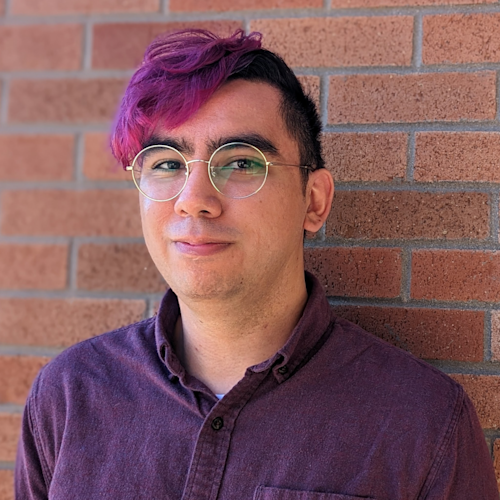

Paul Horton: Chilling with Penguins, Hacking Antarctica, and Sending Balloon Telescopes to Space
Dr. Paul Horton’s fascination with technology started young. At two years old, when their family got their first desktop computer, Paul was the one showing their father how to use the mouse. They grew up continuously drawn to technology, but everything changed in an Introduction to Engineering course during their senior year of high school. In a lesson about the fundamentals of coding, they learned Python and then used that new skill to program Arduinos. "I loved being able to use my computer to interact with real-world hardware, and it was a lightbulb moment for me. From that point on, I wanted to figure out how to integrate code into everything I do."
This led them to Arizona State University (ASU) where they pursued degrees in Applied Physics and Software Engineering while discovering a home in the builder ecosystem. Driven by curiosity after attending their first hackathon, Paul partnered with fellow future MLH Coach Cecilia La Place on an undergraduate research project to study hackathon environments and find better ways to teach practical skills absent from traditional classrooms. That passion naturally culminated in 2015, when Paul joined their friend group to launch Desert Hacks at ASU, treating the hackathon like a massive celebration: "Desert Hacks was the most fun I’ve ever had organizing an event because it was basically just all of us hanging out and coming up with fun ideas to make our hackathon stand out."
That initial spirit of fun laid the groundwork for a lasting community footprint - Desert Hacks eventually evolved into sunhacks. Today, it continues at ASU as an annual hackathon that supports students of all skill levels through workshops, working professional mentorship, and a collaborative community of practice - an initiative Paul continued to support and mentor for years.
Paul continued their academic journey at ASU, earning a master's degree before completing their PhD in Exploration Systems Design - a transdisciplinary program formally integrating astrophysics and engineering. Yet no matter how far their studies progressed, they never forgot their roots in the builder community. Over the past decade, their involvement evolved seamlessly from hackathon attendee and event founder to mentor, organizer, and MLH Coach. During the pandemic's shift to virtual formats, Paul stepped up at Hackcon, hopping on DMs and voice calls to help student teams configure Discord servers, design accessible logistics, and keep their events welcoming to all. As Paul reflects: "I do this because I genuinely love the community and want to see it thrive so I live by example and encourage creativity and fun at all my events."
Today, Paul applies that same scrappy hacker mindset as a Systems Engineer and Astrophysicist working on NASA’s Jet Propulsion Laboratory (JPL) ASTHROS mission. Building a school-bus-sized telescope carried by a football-stadium-sized balloon, Paul frequently relies on the hacker approach to prototype and test telescope subsystems. When test data needs immediate review, they quickly spin up a solution and then uses that rapid prototype as the foundation to engineer a permanent implementation. “I’m super excited about this mission because we will be launching it out of McMurdo Station in Antarctica where I get to hang out with penguins. I also get to fulfill a promise I made long ago to Jon Gottfried that I’ll bring a hackathon to the ice, even if it’s a small one. I can’t wait to get an event pack in the mail down there and have to set up a table for stickers.”
Outside of launching space hardware, Paul is an avid audio enthusiast. They spend their free time experimenting with synthesizers and circuit-based music machines. Whether they're making circuits to make music or working on a balloon-borne space telescope that will map star forming regions of galaxies, Paul is living out the exact same lightbulb moment they had in high school: using code to bring physical hardware to life. The only difference today is the scale.
Quick Facts
Paul Horton, 29
Paul Horton: Chilling with Penguins, Hacking Antarctica, and Sending Balloon Telescopes to Space
Dr. Paul Horton’s fascination with technology started young. At two years old, when their family got their first desktop computer, Paul was the one showing their father how to use the mouse. They grew up continuously drawn to technology, but everything changed in an Introduction to Engineering course during their senior year of high school. In a lesson about the fundamentals of coding, they learned Python and then used that new skill to program Arduinos. "I loved being able to use my computer to interact with real-world hardware, and it was a lightbulb moment for me. From that point on, I wanted to figure out how to integrate code into everything I do."
This led them to Arizona State University (ASU) where they pursued degrees in Applied Physics and Software Engineering while discovering a home in the builder ecosystem. Driven by curiosity after attending their first hackathon, Paul partnered with fellow future MLH Coach Cecilia La Place on an undergraduate research project to study hackathon environments and find better ways to teach practical skills absent from traditional classrooms. That passion naturally culminated in 2015, when Paul joined their friend group to launch Desert Hacks at ASU, treating the hackathon like a massive celebration: "Desert Hacks was the most fun I’ve ever had organizing an event because it was basically just all of us hanging out and coming up with fun ideas to make our hackathon stand out."
That initial spirit of fun laid the groundwork for a lasting community footprint - Desert Hacks eventually evolved into sunhacks. Today, it continues at ASU as an annual hackathon that supports students of all skill levels through workshops, working professional mentorship, and a collaborative community of practice - an initiative Paul continued to support and mentor for years.
Paul continued their academic journey at ASU, earning a master's degree before completing their PhD in Exploration Systems Design - a transdisciplinary program formally integrating astrophysics and engineering. Yet no matter how far their studies progressed, they never forgot their roots in the builder community. Over the past decade, their involvement evolved seamlessly from hackathon attendee and event founder to mentor, organizer, and MLH Coach. During the pandemic's shift to virtual formats, Paul stepped up at Hackcon, hopping on DMs and voice calls to help student teams configure Discord servers, design accessible logistics, and keep their events welcoming to all. As Paul reflects: "I do this because I genuinely love the community and want to see it thrive so I live by example and encourage creativity and fun at all my events."
Today, Paul applies that same scrappy hacker mindset as a Systems Engineer and Astrophysicist working on NASA’s Jet Propulsion Laboratory (JPL) ASTHROS mission. Building a school-bus-sized telescope carried by a football-stadium-sized balloon, Paul frequently relies on the hacker approach to prototype and test telescope subsystems. When test data needs immediate review, they quickly spin up a solution and then uses that rapid prototype as the foundation to engineer a permanent implementation. “I’m super excited about this mission because we will be launching it out of McMurdo Station in Antarctica where I get to hang out with penguins. I also get to fulfill a promise I made long ago to Jon Gottfried that I’ll bring a hackathon to the ice, even if it’s a small one. I can’t wait to get an event pack in the mail down there and have to set up a table for stickers.”
Outside of launching space hardware, Paul is an avid audio enthusiast. They spend their free time experimenting with synthesizers and circuit-based music machines. Whether they're making circuits to make music or working on a balloon-borne space telescope that will map star forming regions of galaxies, Paul is living out the exact same lightbulb moment they had in high school: using code to bring physical hardware to life. The only difference today is the scale.


